To cap off the year, I wrote about the fascinating geopolitics of Israel’s recognition of Somaliland and the broader implications for state sovereignty, unity and territorial integrity in this era of global disorder.
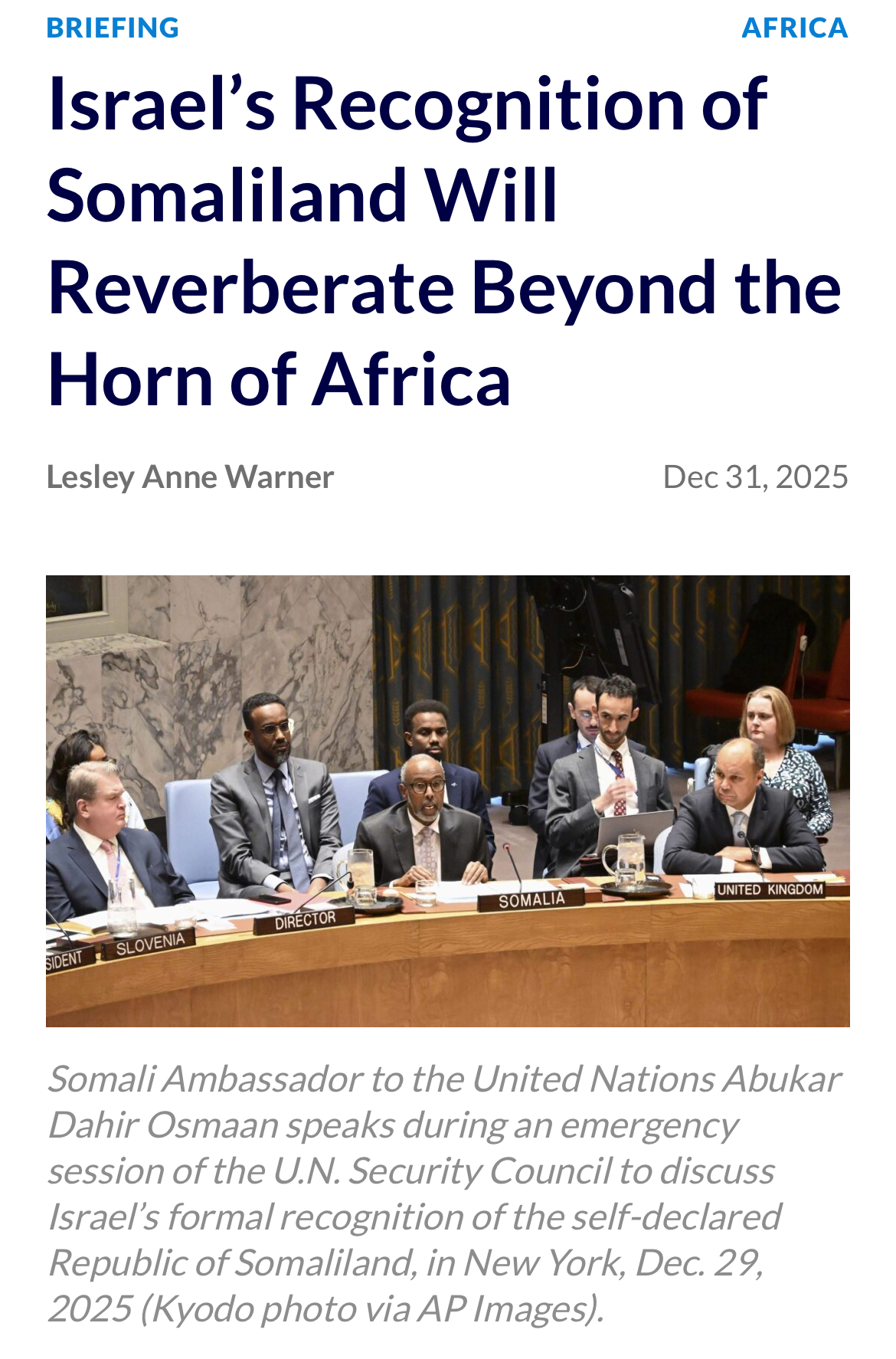
This action comes at a particularly awkward time, with Somalia about to start its presidency of the UN Security Council having lost two potential allies on the A3+1 (with Algeria and Guyana rotating off) and gaining a potentially unhelpful Bahrain, which was an original signatory to the Abraham Accords. In the piece, I assessed that the Council will more likely be a venue for airing grievances and making a public case for/against wider recognition rather than a mechanism for resolving the dispute.
I also wrote about Israel’s likely motivations, and how being the first-mover among UN Member states provides other countries some level of diplomatic cover – including Ethiopia, which has been flirting with recognizing Somaliland as one of its options to secure access to the sea.
Because I always keep an eye on the bigger picture, I allude to how Somaliland’s path diverges from the usual post-Cold War pathways for new state creation (combo of military victory, negotiated agreement and internationally monitored referenda), but I don’t litigate arguments on ‘restored sovereignty’ or the Montevideo Convention, which have been used to advance the cause of recognition, including by Israel at the UNSC yesterday.
Lastly, I wrote about what the United States might do, given the personalization of U.S. foreign policy. Just as MBS got Trump to be slightly more invested in the Sudan peace process during his visit to Washington last month, a Bibi ask of Trump – framed as counter-Iran, counter-PRC, etc – could provide the most likely chance of U.S. recognition in Somaliland’s 3+ decades of international isolation.
You can read the full piece here at World Politics Review.

 Lesley Anne Warner, PhD: Insight | Strategy | Impact
You must be logged in to post a comment.